
John Cage Source Material
Dear The Industry Insiders,
We are in full Cageian (organized) chaos here at The Industry, and can’t wait to share Europeras 1 & 2 with you… in just a few weeks at Sony Pictures Studios with the LA Phil.
There are some amazing materials we have been working with that might be of interest to those of you who want to dive deep into the world of John Cage and his one and only opera.
First, we begin a set of instructions for making Europeras 1 & 2. Usually we have a score to work from, but Cage did not create a score for this piece and instead instructions were compiled from documentation and Laura Kuhn’s research on the premiere of the work at Oper Frankfurt in 1987.
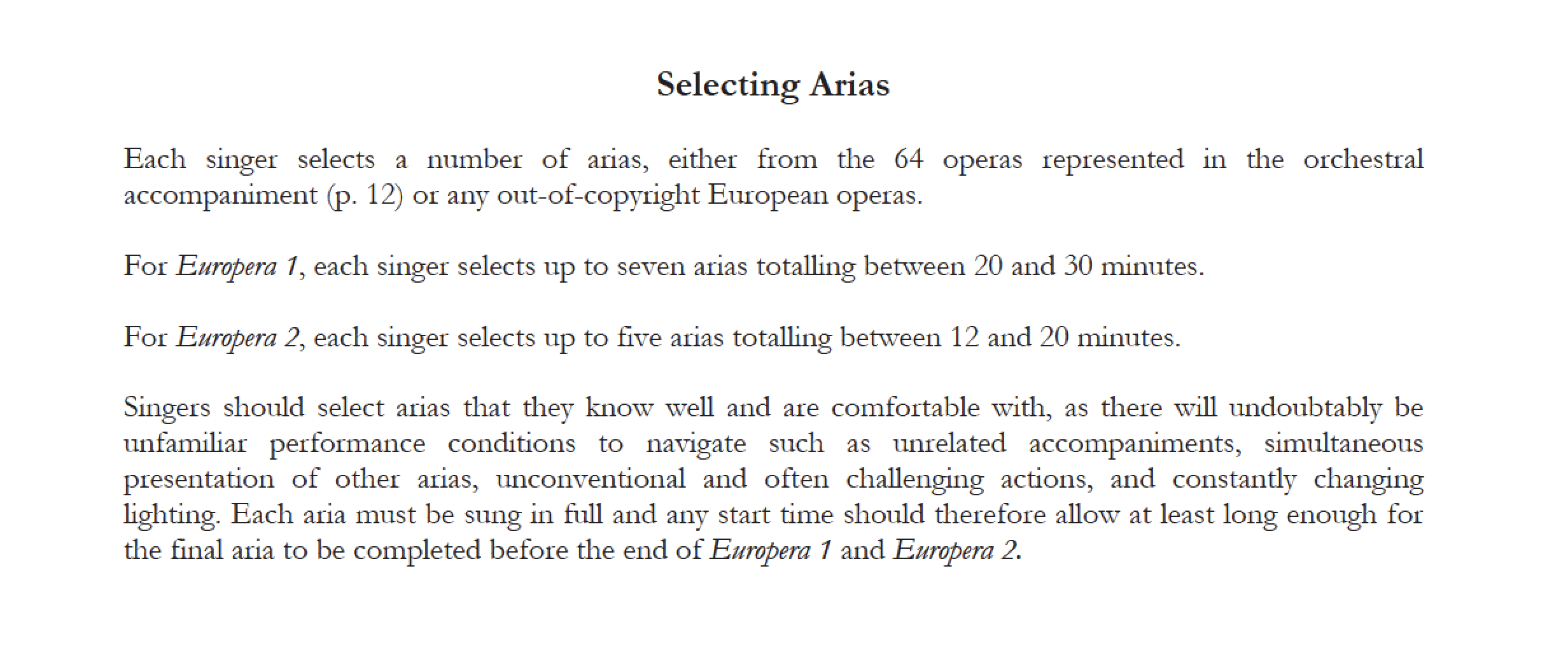
I have enjoyed reading these instructions looking for small insights into the challenges we were to face along the way. For instance on page 13 Cage offers some advice to the singers in choosing their arias:
While page 14 describes the chance operations that were applied to the actions or movements were chosen by our production team.
Using chance procedures, a page is selected and a word then chosen that is suggestive of a possible stage action to be developed.
For The Industry’s production we used a random number generator to choose the dictionary page, then choose the 64th* word on that page to determine the 150 actions that will take place on stage. Words such as Ticklish, Protest, Needle point will be enacted by singers on our stage with props.
Throughout the development of this work, I am constantly reminded of Cage’s wonderful sense of humor and playfulness. You can see it here when describing how to handle the synopses in the program booklet on page 22.

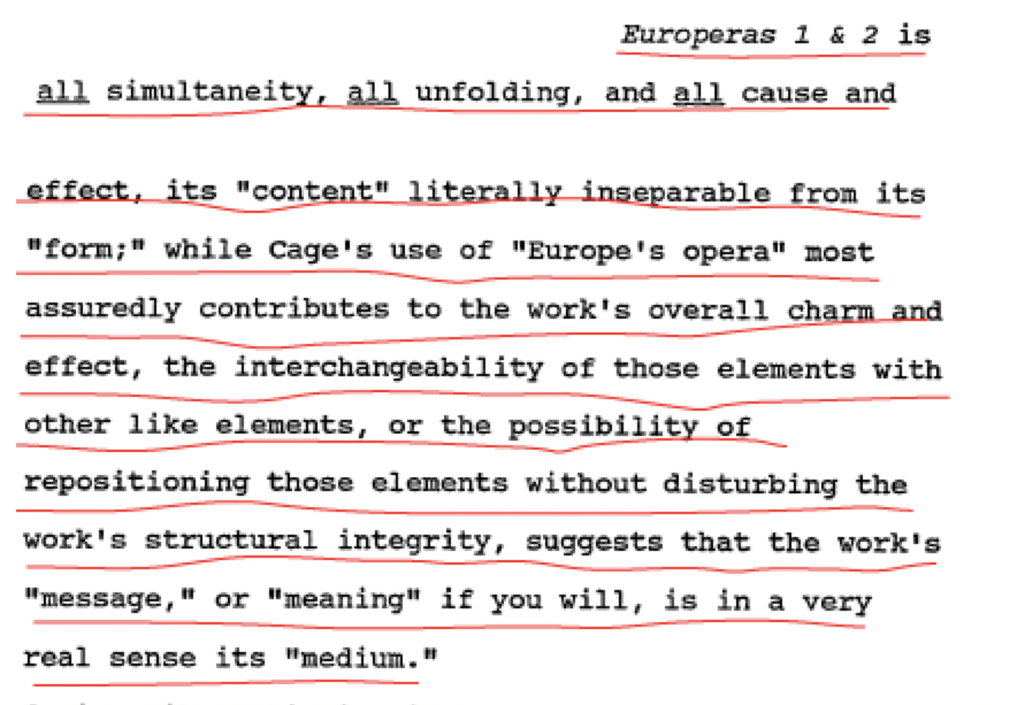
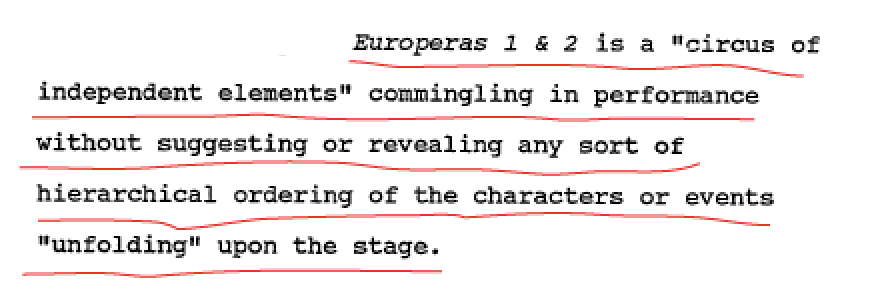
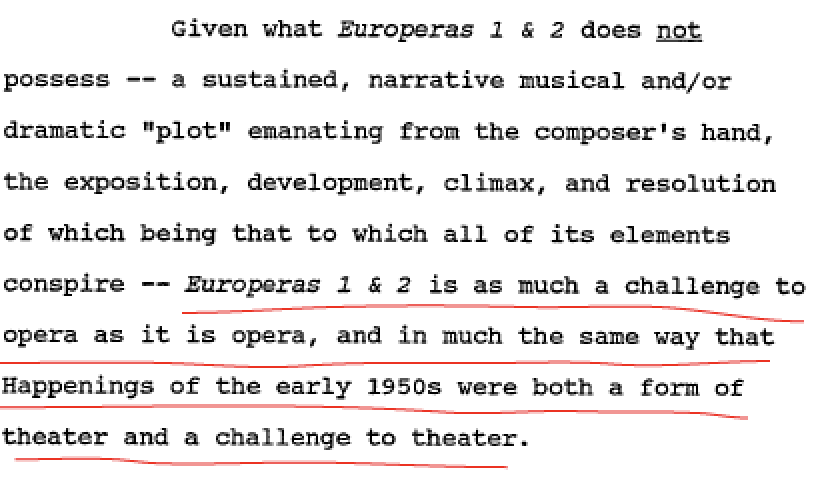
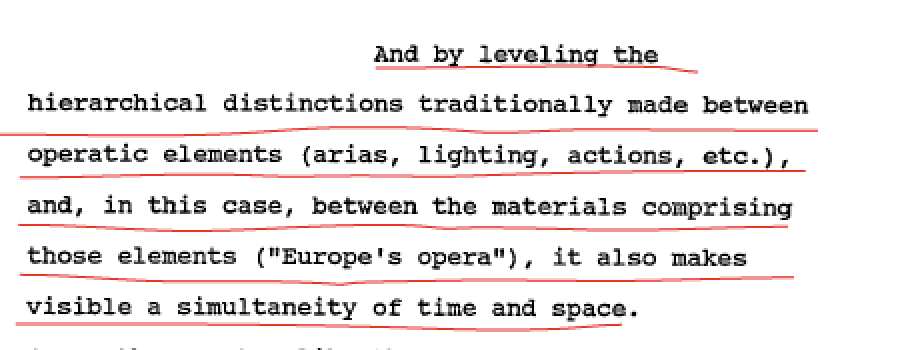
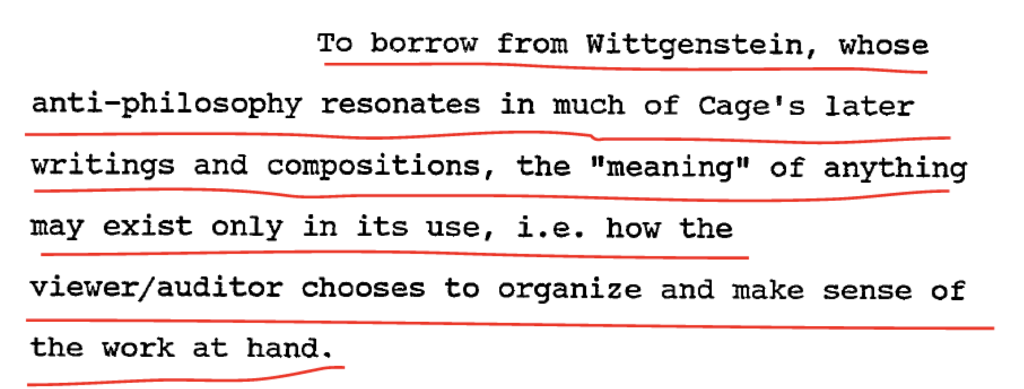
Another resource is the brilliant 1992 UCLA doctoral dissertation, John Cage’s “Europeras 1 & 2”: The Musical Means of Revolution by Laura Kuhn. I was very intimidated by this tome, but through Laura’s dedication to Cage and this work, the writing is accessible and incredibly insightful. We have highlighted some of our favorite passages that we used as guideposts in creating our version of this work. With Laura’s permission, I have included some of those passages here:
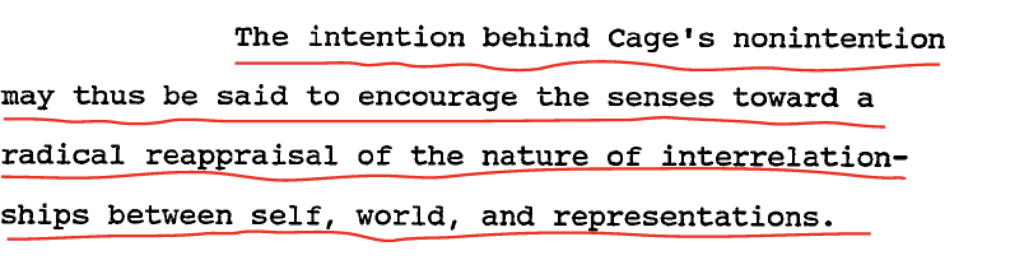
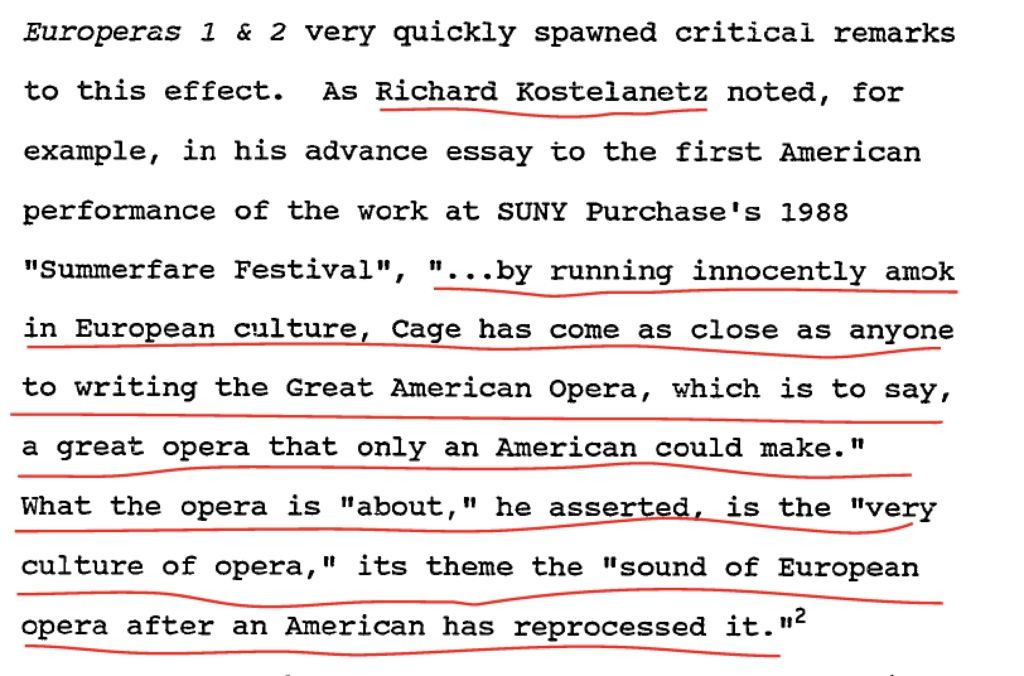
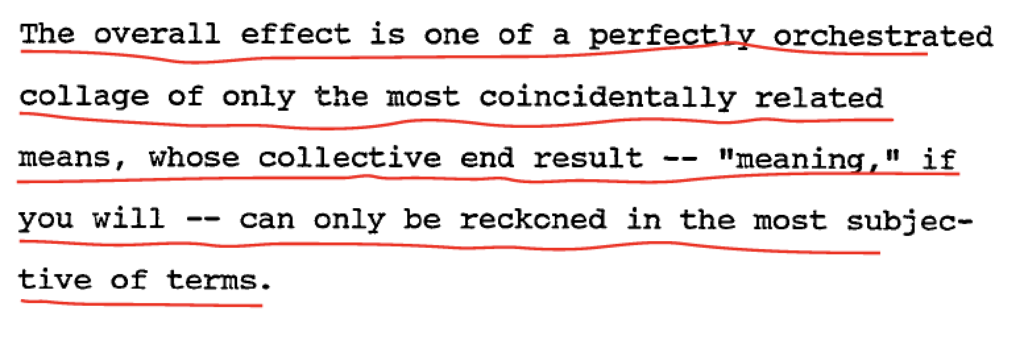
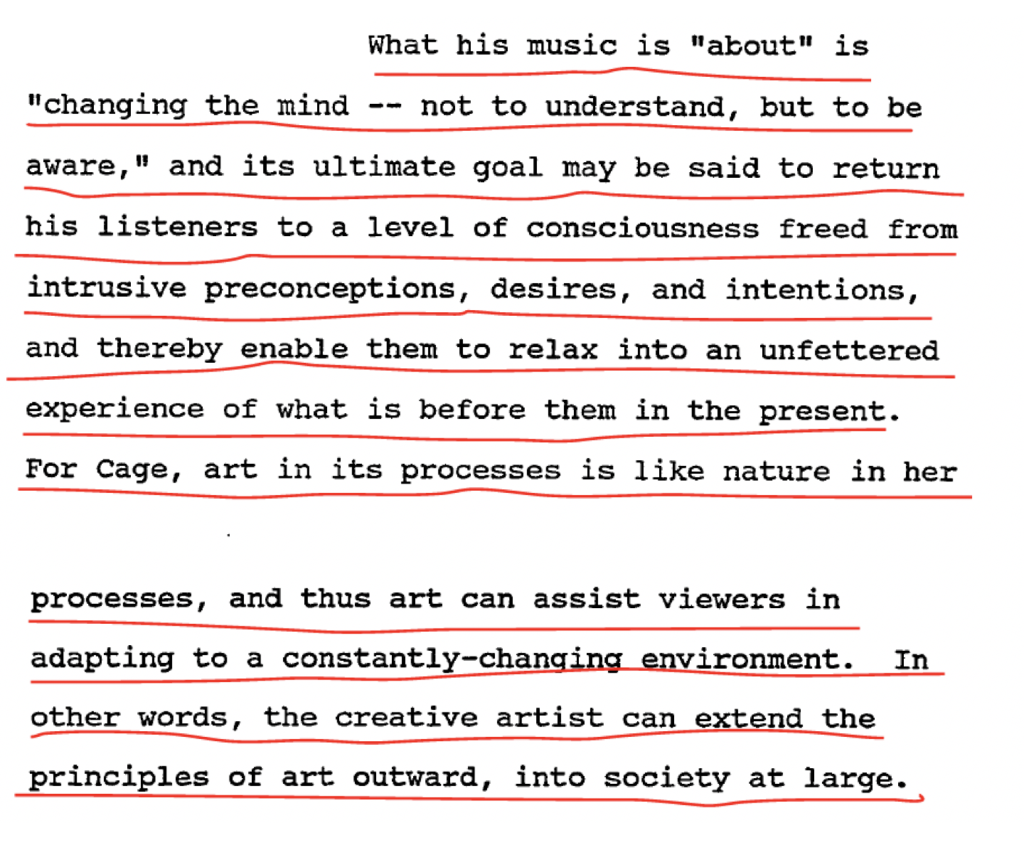
And last but not least I hope you will read this insightful blog post by our music director Marc Lowenstein exploring the work of Cage and the legacy of Californian experimentalists.
Finally, don’t forget as a member you are invited to our special dress rehearsal at Sony Pictures Studios on November 4 at 7pm. Please RSVP to me if you would like to attend: elizabeth@theindustryla.org. And if you can’t make it to the dress rehearsal, there are still some tickets available for purchase here.
All my best,
Elizabeth Cline
Executive Director, The Industry
*64 is a number unique (and sacred) to the I Ching, an ancient Chinese divination text. The I Ching has 64 hexagrams, the symbol system used to identify order in chance events. For Cage it became a perfect tool to create chance-controlled compositions: he would “ask” the book questions about various aspects of the composition at hand, and use the answers to compose. The vast majority of pieces Cage completed after 1951 were created using the I Ching.