
Cue the Vampires. Please!
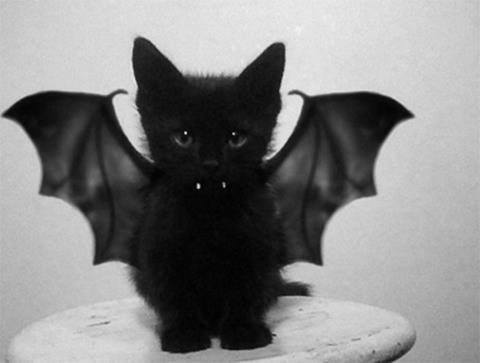
Last week, I considered an inspiring quote by Yuval Sharon, The Industry’s Artistic Director. Today, let’s take a look at a decidedly less serious opera quote – one of my favorites, ever.
“What they are proposing — modernizing it, “spicing it up” and appealing to a younger audience —can no longer be considered opera. They are taking away what appeals to opera lovers: “opera on a grand scale,” which is what opera should be. If San Diego cannot support opera as it has been — traditional and grandiose — then the city does not deserve having it. I know I would not subscribe to see an opera with vampires and jazz in it. Yolanda [Last Name Withheld] La Mesa”
 Imagine! Opera with vampires! And jazz music! What’s next?… men who sing like women? Women who can vote?!
As everybody knows, when God first invented the art form in 1607, He very clearly stipulated that opera should be uncomfortably long and dripping with pathos, that a ball-gowned Soprano should either die from adultery or Tuburculosis, and that tickets be pricey enough to keep out the youths and street-gangs (well, at least the Sharks, if not the Jets). Optionally, there might also be a silly butler character.
“Traditional and grandiose,” oh, boy. Yolanda, I love you, girlfriend, but you are clearly going insane.
As you’ve probably guessed, Yolanda was editorializing about the frenzied and wildly controversial attempted closure of San Diego Opera, a company that has been producing opera in a pretty grandiose style for around 49 years – or, rather, she was referring to the many proposals to revitalize it. When the glitterati of American opera administration descended on San Diego in recent months for an intervention, the refrain was resoundingly clear: Opera needs to diversify in order to thrive!
We all know what kinds of ideas comes to mind when most Americans hear the “o-word,” because we’ve all had that same, awkward conversation at a party. “Ooh, I looove Jackie Evancho!” “Boheme always makes me cry!” Yeah, well, me too, but for very different reasons. Opera is an art form frozen in time, some people insist – and, gee, that’s what makes it so great!
Let’s pause for a moment and put this into perspective. For hundreds of years, opera was a decidedly contemporary art form, with radically shifting styles and sensibilities. What was electrifying to the Monteverdi fanboys in 1640’s Venice would have looked and sounded pretty cheesy to, say, fin de siècle Austrians, when SALOME burst out of the gate in 1906. This tedious preoccupation with a firmly established ‘canon’, in which opera companies keep circling back to the same beloved few works, didn’t really catch hold until the 20th century. For most of its existence, opera has actually been downright obsessed with the new and the cutting-edge.
 What I really find unbearable about Yolanda’s assessment is this ridiculous perception that opera can only have it one way… as if the average music lover isn’t sophisticated enough to enjoy a gorgeous DON CARLO one night and INVISIBLE CITIES, the next. If San Diego is truly undeserving of anything, it’s the toxic notion that opera must, by its very nature, be predictable, unsurprising, or unimaginative.
And, please, don’t you dare tell Yolanda this, because I know it’ll just break her precious heart, but we’re actually in the midst of a really thriving moment for contemporary opera, particularly here in North America. The folks at Opera America note that more than 360 new operas have been produced in the region since the year 2000, a figure that’s pretty antithetical to the tedious, old proclamation that opera is dead and dying.
Opera certainly isn’t dying, but it’s true that many stereotypes about opera are beginning to go extinct. And may they rest in peace!